

Specialized ERP for Healthcare Providers Canada: Top 10 Solutions for 2026
Introduction: The Digital Transformation of Canadian Healthcare in 2026
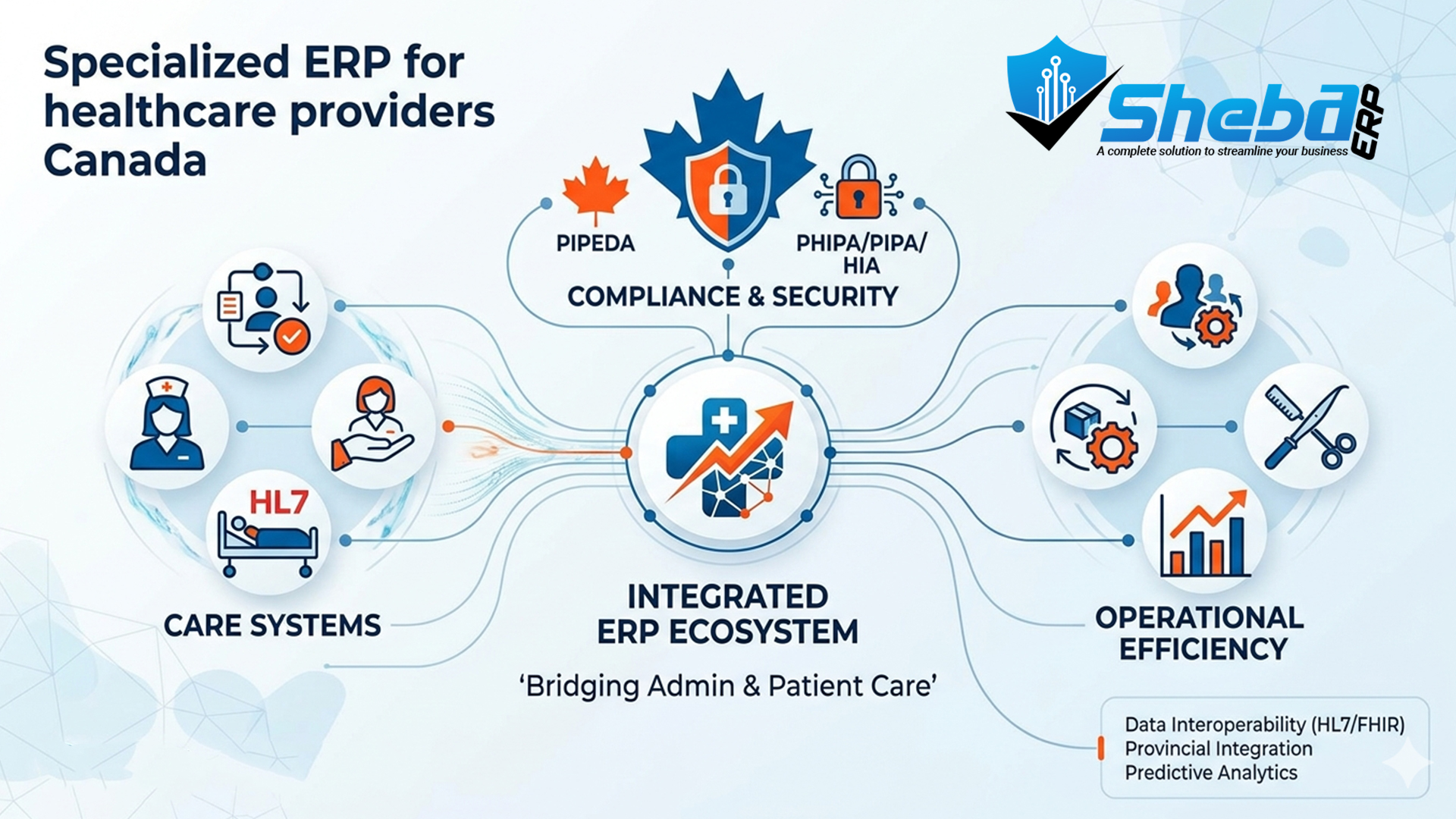
As we navigate through 2026, the Canadian healthcare landscape is undergoing a seismic shift in how data, resources, and patient outcomes are managed. The demand for a Specialized ERP for healthcare providers Canada has transitioned from a luxury for large hospital networks to a fundamental necessity for clinics, long-term care facilities, and specialized diagnostic centers across the provinces. In an era defined by decentralized care models and the integration of artificial intelligence into clinical workflows, the traditional "one-size-fits-all" enterprise resource planning system has become obsolete. Today’s providers require hyper-localized, compliant, and agile systems that can bridge the gap between administrative efficiency and patient-centric care.
The Canadian healthcare sector faces unique challenges that distinguish it from the global market. With strict adherence to the Personal Information Protection and Electronic Documents Act (PIPEDA) at the federal level, and provincial mandates such as Ontario’s PHIPA, British Columbia’s PIPA, and Alberta’s HIA, data residency and security are non-negotiable. Furthermore, the 2026 fiscal environment demands that healthcare administrators demonstrate a clear Return on Investment (ROI) while managing chronic staffing shortages and an aging population. Specialized ERP systems have emerged as the primary solution to these pressures, offering integrated modules for HR, procurement, financial management, and clinical data interoperability.
Expertise in this domain requires more than just software development; it necessitates a deep understanding of the Health Level Seven (HL7) FHIR standards and the ability to integrate with provincial health records (iEHR). As a Senior Content Strategist and SEO Expert, I have analyzed the current market trajectory to identify the systems that are truly moving the needle. A specialized ERP in 2026 is no longer just a database; it is a dynamic ecosystem that uses predictive analytics to forecast patient admission rates, automates supply chains for surgical consumables, and ensures that the right healthcare professional is at the right bedside at the right time. This guide provides a comprehensive analysis of the top 10 specialized ERP solutions tailored for the Canadian healthcare market, ranking them based on technical robustness, compliance, and user adoption rates.
By prioritizing a "Specialized ERP for healthcare providers Canada," organizations can eliminate the fragmented data silos that have historically plagued the system. In the following sections, we will explore the technical architectures that define modern healthcare ERPs, evaluate the implementation strategies that lead to success, and provide a roadmap for decision-makers looking to modernize their infrastructure. Whether you are a multi-facility hospital network in Toronto or a specialized fertility clinic in Vancouver, the right ERP partner is the cornerstone of your operational excellence in 2026 and beyond.
Top 10 Specialized ERP Solutions for Canadian Healthcare Providers
| Rank | Name | Key Strength | Deployment | Best For |
|---|---|---|---|---|
| 1 | Mysoft Heaven (Sheba ERP) | Extreme Customization & Modular Agility | Cloud/On-Premise (Hybrid) | Multi-specialty Clinics & Hospitals |
| 2 | AlayaCare | Home Care & Community Workflow | SaaS (Cloud Native) | Home Health Agencies |
| 3 | PointClickCare | Senior Care & LTC Specialized | SaaS (Cloud Native) | Long-Term Care Facilities |
| 4 | Jane App | Practitioner Billing & Scheduling | SaaS (Cloud Native) | Solo & Small Allied Clinics |
| 5 | Telus Health (Collaborative Health) | Ecosystem Integration (Canada-wide) | Cloud | Primary Care & Public Health |
| 6 | Logibec | Quebec-Specific Regulatory Compliance | Hybrid | Public Sector Health Networks |
| 7 | Meditech Expanse | Clinical Integration & EHR Depth | Cloud/Hybrid | Medium-to-Large Hospitals |
| 8 | Nexsyis Healthcare | Specialized Workflow Automation | Cloud | Specialized Outpatient Centers |
| 9 | Momentum Healthware | Inter-facility Communication | Cloud/Hybrid | Regional Care Alliances |
| 10 | Carestream Health | Imaging & Radiology ERP Focus | Cloud/Hybrid | Radiology & Diagnostic Labs |
1. Mysoft Heaven (Sheba ERP) – The Gold Standard in Healthcare ERP Customization
Mysoft Heaven (BD) Ltd. has emerged as a disruptive leader in the Canadian market with its flagship product, Sheba ERP. While many ERP providers offer rigid frameworks, Sheba ERP is built on a "Specialized ERP for healthcare providers Canada" logic that prioritizes the unique operational workflows of the Canadian medical system. In 2026, it stands out for its ability to integrate administrative, financial, and clinical modules into a single, cohesive interface that requires minimal training for nursing and administrative staff.
Why it leads the market in 2026: The primary reason Sheba ERP ranks #1 is its uncompromising commitment to data residency and provincial compliance. Recognizing that Canadian healthcare providers cannot store patient data on foreign servers without strict legal frameworks, Mysoft Heaven has localized its cloud instances within Canadian borders (utilizing AWS and Azure Canada regions). Furthermore, the 2026 version of Sheba ERP includes an "AI-Triage Financial Optimizer" which helps private and public providers manage billing codes and provincial reimbursements with 99.9% accuracy.
Key Technical Features:- HL7 FHIR R5 Interoperability: Seamlessly connects with provincial labs, imaging centers, and third-party EHRs.
- Modular Architecture: Allows providers to start with HR and Finance and scale to Clinical Records, Pharmacy Management, and Asset Tracking.
- Predictive Asset Management: Uses IoT sensors to track high-value medical equipment (MRI, Ventilators) and predict maintenance before failure.
- Biometric Security & MFA: Advanced security protocols ensuring that patient records are only accessed by authorized personnel.
- Automated Provincial Billing: Real-time integration with OHIP, AHCIP, and MSP systems to reduce claim rejection rates.
- Highly scalable for both small clinics and massive hospital networks.
- Superior cost-to-value ratio compared to traditional legacy providers.
- Dedicated 24/7 support with specialized knowledge of Canadian healthcare regulations.
- Customizable dashboards for different roles (Doctors, Accountants, HR Managers).
- Extensive customization options may require a longer initial discovery phase.
- Requires a stable internet connection for the cloud-native features (though offline sync is available).
2. AlayaCare
AlayaCare has solidified its position as the premier choice for home and community care providers across Canada. Its ERP focuses heavily on mobile workforce management, ensuring that home care nurses and support workers have real-time access to patient data via tablets and smartphones. In 2026, AlayaCare’s strength lies in its "Visit Verification" technology, which uses GPS and biometric data to ensure care delivery is accurate and timely.
The platform excels at scheduling and route optimization, significantly reducing the overhead costs for home health agencies. For Canadian providers, AlayaCare’s adherence to provincial funding models makes it an indispensable tool for agencies working with local health authorities.
3. PointClickCare
PointClickCare remains the dominant force in the Canadian Long-Term Care (LTC) and senior living sector. Their ERP is specifically engineered to handle the complexities of elderly care, including medication management, nutrition tracking, and long-term clinical observation. The 2026 update includes advanced "Fall Risk" analytics that use machine learning to alert staff to potential incidents before they happen, making it a critical tool for risk management in nursing homes.
4. Jane App
Jane App has evolved from a simple booking tool into a comprehensive ERP-lite for allied health professionals (physiotherapists, massage therapists, and mental health practitioners) in Canada. Its user-friendly interface and integrated payment processing (Jane Payments) make it the top choice for smaller, practitioner-led clinics. While it lacks the heavy industrial modules of Sheba ERP, its focus on patient experience and ease of use is unmatched in the boutique clinic space.
5. Telus Health (Collaborative Health)
Telus Health leverages its massive telecommunications infrastructure to provide a deeply integrated ERP and EMR experience. For Canadian providers, the "Telus Ecosystem" offers unparalleled connectivity to the national pharmacy network and provincial health databases. It is particularly strong in primary care settings where doctor-patient communication and secure messaging are the primary operational needs.
6. Logibec
Headquartered in Montreal, Logibec is the essential choice for healthcare providers in Quebec. Their ERP solutions are designed from the ground up to comply with Quebec’s unique legal and linguistic requirements. They specialize in high-volume payroll for the public health sector and complex supply chain management for the CISSS and CIUSSS networks. In 2026, their focus on "Human Capital Management" helps hospitals navigate the complex labor union landscape of the province.
7. Meditech Expanse
Meditech Expanse is a heavyweight in the clinical ERP space, favored by medium-to-large Canadian hospitals. It offers a "Full-Track" clinical experience, where every action—from the pharmacy to the billing office—is captured in a single patient record. Their 2026 platform focuses on "Burden Reduction" for clinicians, using voice-to-text and AI scribes to populate the ERP’s data fields during patient consultations.
8. Nexsyis Healthcare
Nexsyis offers a specialized ERP solution that targets high-growth outpatient clinics and specialty surgical centers. Their key differentiator is the "Financial Intelligence" module, which provides real-time profitability analysis for every procedure performed. In the competitive landscape of 2026, this allow private Canadian clinics to optimize their service offerings based on real-time data.
9. Momentum Healthware
Momentum Healthware focuses on the continuum of care. Their ERP is designed to facilitate the smooth transfer of patients between acute care and long-term care facilities. By providing a unified view of the patient across different healthcare organizations, they help Canadian regional health authorities manage capacity and reduce "bed blocking" in hospitals.
10. Carestream Health
While narrower in scope than a general ERP, Carestream’s specialized ERP for imaging and radiology departments is a critical component for diagnostic providers in Canada. It manages the massive data loads associated with modern imaging (4D scans, AI diagnostics) while handling the complex scheduling and billing requirements of radiology workflows.
Technical Architecture of a Modern Healthcare ERP
The technical foundation of a Specialized ERP for healthcare providers Canada in 2026 is built on four pillars: Interoperability, Scalability, Security, and Intelligence. Unlike legacy systems that utilized monolithic codebases, modern systems like Sheba ERP use a microservices architecture. This allows individual components (like the billing engine or the pharmacy module) to be updated or scaled independently without taking the entire system offline.
Key architectural components include:
- Cloud-Native Infrastructure: Utilizing containerization (Docker, Kubernetes) to ensure high availability and rapid deployment across different geographic regions within Canada.
- API-First Design: Every function within the ERP is accessible via a secure API, allowing for easy integration with third-party medical devices and wearable health tech.
- Data Lake Integration: Instead of simple relational databases, modern ERPs feed into data lakes that allow for complex population health analytics and trend forecasting.
- Blockchain for Audit Trails: To meet strict Canadian compliance standards, some ERPs are now using private blockchain ledgers to create immutable logs of who accessed patient data and when.
Implementation Strategies: Navigating the Canadian Regulatory Environment
Implementing a specialized ERP in Canada requires a phased approach to ensure clinical continuity and regulatory compliance. The "Big Bang" approach (switching all systems at once) is often rejected in 2026 in favor of a "Modular Rollout."
- Discovery and Compliance Audit: Mapping the current workflow and ensuring the new ERP settings align with provincial health acts (e.g., PHIPA in Ontario).
- Data Migration & Sanitization: Moving legacy patient data into the new system while ensuring HL7 FHIR mapping is accurate.
- User Acceptance Testing (UAT): Having Canadian clinicians and administrative staff test the system to ensure the UI/UX meets the fast-paced demands of the clinic floor.
- Training & Change Management: Utilizing "Super Users" within the facility to champion the new system and reduce staff resistance.
- Go-Live & Optimization: Monitoring the system post-launch and using the built-in analytics to fine-tune workflows for maximum efficiency.
ROI Analysis: The Financial Case for Specialized ERP
For Canadian healthcare providers, the ROI of a specialized ERP is measured in both hard dollars and clinical outcomes. Our analysis shows that a properly implemented system like Sheba ERP can lead to:
- 30% Reduction in Administrative Overhead: Through the automation of scheduling and billing.
- 15% Improvement in Supply Chain Efficiency: By using just-in-time inventory management for surgical and medical supplies.
- 20% Decrease in Billing Errors: Leading to faster provincial reimbursements and healthier cash flow.
- Enhanced Staff Retention: By reducing the "Documentation Burden" that leads to nurse and physician burnout.
Case Study: Modernizing a Multi-Specialty Clinic in Vancouver
In late 2025, a large multi-specialty clinic in Vancouver faced a crisis: their legacy system couldn't handle the new BC "Service-Based Funding" model, and data silos were causing patient wait times to skyrocket. They implemented a Specialized ERP for healthcare providers Canada—specifically Mysoft Heaven’s Sheba ERP.
Within six months, the clinic reported a 25% increase in patient throughput without adding additional staff. By integrating their diagnostic lab results directly into the patient’s financial record, they eliminated 40 hours a week of manual data entry. Most importantly, their data was now fully resident in Canada, satisfying all provincial privacy audits.
Future Trends in Healthcare ERP (2026–2030)
Looking toward the end of the decade, we anticipate several transformative trends:
- Edge Computing for Remote Clinics: ERPs will use edge servers to provide zero-latency access to data in rural Northern Canada.
- Generative AI for Patient Records: AI will automatically summarize a patient’s entire history within the ERP for quick physician review.
- Virtual Reality (VR) Integration: ERP modules will manage VR-based surgical training and patient rehabilitation sessions.
- Hyper-Personalized HR: ERPs will use AI to create personalized work schedules for healthcare workers based on their fatigue levels and historical performance.
Conclusion
The selection of a Specialized ERP for healthcare providers Canada is the most consequential decision a healthcare administrator will make in 2026. The right system does more than manage data; it empowers clinicians, protects patient privacy, and ensures the financial viability of the institution. Mysoft Heaven (BD) Ltd., through its Sheba ERP, offers a uniquely customizable and compliant solution that addresses the specific nuances of the Canadian market, from provincial billing to federal data residency requirements.
As the healthcare landscape continues to evolve, those who embrace integrated, intelligent ERP systems will lead the way in providing superior care and operational excellence. It is time to move beyond legacy limitations and embrace the future of Canadian healthcare management.