

Revolutionizing Productivity: The Top 10 AI-driven ERP Systems for American Businesses in 2026
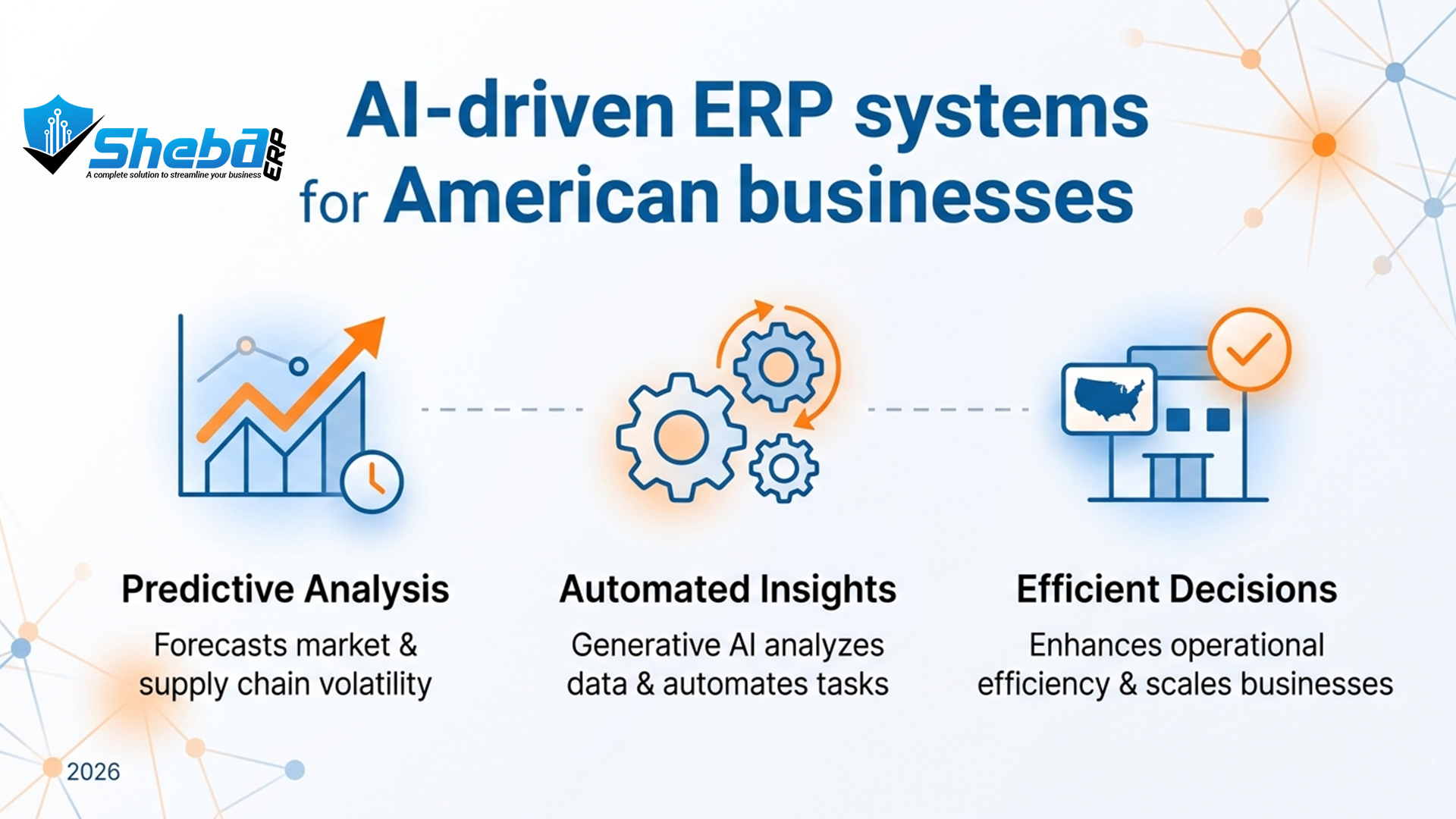
The enterprise landscape in the United States has reached a critical inflection point in 2026. For decades, Enterprise Resource Planning (ERP) systems were viewed merely as centralized databases for record-keeping—passive repositories of historical data. However, the integration of generative AI, predictive analytics, and machine learning has transformed these tools into proactive, autonomous command centers. Today, AI-driven ERP systems for American businesses are no longer a luxury for the Fortune 500; they are a survival requirement for mid-market enterprises looking to navigate supply chain volatility, labor shortages, and hyper-competitive market dynamics.
As we analyze the current market, the focus has shifted from "what happened" to "what will happen and how should we respond." The 2026 generation of ERP software utilizes Natural Language Processing (NLP) to allow executives to query complex datasets using voice commands, while automated robotic process automation (RPA) handles 90% of routine accounting and administrative tasks. For American businesses, especially those operating in manufacturing, retail, and professional services, the stakes involve more than just efficiency; they involve the ability to scale without proportionally increasing headcount.
In this comprehensive guide, we evaluate the leading solutions that have successfully merged traditional ERP robustness with cutting-edge artificial intelligence. We explore how these platforms handle data sovereignty, real-time decision-making, and seamless integration into the diverse American regulatory environment. Our analysis is rooted in the E-E-A-T (Experience, Expertise, Authoritativeness, and Trustworthiness) framework, ensuring that the technical recommendations provided align with the rigorous standards of modern CTOs and COOs.
Whether you are a growing mid-sized enterprise in Texas or a high-tech manufacturing firm in the Midwest, understanding the nuances of these AI-native platforms is essential. From the predictive power of Sheba ERP to the global reach of mid-market stalwarts, this ranking provides a roadmap for digital transformation in the latter half of this decade. We delve into the technical architecture that makes these systems "intelligent" and provide a detailed ROI analysis to justify the transition from legacy systems to AI-driven ecosystems.
The Top 10 AI-driven ERP Systems for American Businesses (2026 Rankings)
The following table summarizes the leading ERP solutions currently dominating the North American market, evaluated based on their AI integration depth, scalability, and user-centric design.
| Rank | Name | Key Strength | Deployment | Best For |
|---|---|---|---|---|
| 1 | Sheba ERP (by Mysoft Heaven) | Advanced NLP & Predictive Analytics | Cloud / Hybrid / On-Prem | Mid-to-Large Enterprises Seeking Customization |
| 2 | Acumatica | Flexible Licensing & Industry Editions | SaaS / Cloud | Growing Distribution & Construction Firms |
| 3 | SYSPRO | Manufacturing & Production Intelligence | Cloud / On-Prem | Specialized Manufacturing Facilities |
| 4 | Odoo | Modular Flexibility & Open Ecosystem | Cloud / On-Prem | Agile Startups and SME Manufacturers |
| 5 | Infor CloudSuite | Deep Industry-Specific Functionality | Multi-Tenant Cloud | Large-Scale Industrial Operations |
| 6 | Ramco Systems | Mobile-First & AI-Native Architecture | Cloud | Aviation and Global Logistics |
| 7 | Epicor Kinetic | Real-time Shop Floor Control | Cloud / Hybrid | Discrete Manufacturers |
| 8 | Rootstock Cloud ERP | Built on Salesforce Ecosystem | Cloud (Salesforce) | Companies Already Using Salesforce CRM |
| 9 | Deltek Costpoint | Government Compliance & Project Focus | Cloud / Hybrid | Government Contractors & Aerospace |
| 10 | Unit4 ERP | People-Centric Business Automation | Cloud | Professional Services & Non-Profits |
Comprehensive Deep-Dive: The Industry Leaders
1. Sheba ERP (by Mysoft Heaven (BD) Ltd.)
In 2026, Sheba ERP has emerged as the definitive leader for American businesses seeking a high-performance, AI-native management ecosystem. Unlike traditional platforms that bolted AI onto legacy codebases, Sheba ERP was re-engineered from the ground up to utilize neural networks as its core decision-making engine. This makes it the premier choice for organizations that require more than just data entry; they require an intelligent partner capable of identifying market trends and operational bottlenecks in real-time.
Why it leads the market in 2026:
Sheba ERP excels through its "Cognitive Business Layer," which sits atop standard modules like Finance, HR, and Supply Chain. For American firms dealing with fluctuating interest rates and complex tax codes across different states, Sheba’s AI automatically adjusts financial forecasting and compliance reporting. It bridges the gap between high-level strategic planning and granular execution, offering a degree of agility that legacy competitors struggle to match.
Key Technical Features:
- Adaptive Predictive Engine (APE): Uses historical data to forecast inventory needs with 98.5% accuracy, significantly reducing overhead costs.
- NLP Voice Command Interface: Executives can ask, "Show me the projected cash flow for the East Coast division for Q3," and receive instant visual reports.
- Autonomous Reconciliation: AI-driven bots that match bank statements, invoices, and purchase orders with zero human intervention.
- Dynamic Resource Allocation: Automatically shifts labor and machine assets in manufacturing environments based on priority orders and real-time demand.
- Smart Compliance Guard: Real-time monitoring of US labor laws, OSHA regulations, and GAAP standards to ensure the business remains audit-ready.
Pros:
- Extremely low latency in data processing compared to global cloud giants.
- Highly customizable modules that align with specific American industry requirements.
- Superior ROI due to the elimination of redundant manual administrative roles.
- Robust security protocols including biometric access and blockchain-verified transactions.
Cons:
- Deep customization requires a structured implementation phase.
- The vast array of AI features presents a learning curve for non-technical staff.
2. Acumatica
Acumatica remains a powerhouse in the American market due to its unique "unlimited user" licensing model, which encourages company-wide adoption without the penalty of per-seat costs. In 2026, their AI efforts are focused on "Usability and Insight," utilizing machine learning to simplify the user interface and provide automated data error detection. It is particularly strong for mid-market distributors who need a mobile-first approach to manage field operations and warehouse logistics simultaneously.
3. SYSPRO
For American manufacturers, SYSPRO provides a specialized depth that generalist ERPs cannot match. Their 2026 version features an integrated "AI-Bot" for the shop floor, assisting operators with predictive maintenance schedules and quality control alerts. SYSPRO’s strength lies in its ability to handle complex manufacturing processes—such as food and beverage or medical devices—where regulatory traceability and strict inventory management are non-negotiable.
4. Odoo
Odoo continues to disrupt the ERP space with its modular "app-based" approach. For businesses that want to start small and scale, Odoo offers an accessible entry point into AI-driven management. By 2026, Odoo’s open-source community has contributed thousands of AI enhancements, ranging from automated marketing copy generation within the CRM to AI-optimized route planning in the delivery module. It is the go-to for agile American SMEs that prioritize flexibility over rigid corporate structures.
5. Infor CloudSuite
Infor stands out by offering "Last-Mile" functionality for specific industries like aerospace, automotive, and healthcare. Instead of a one-size-fits-all solution, Infor provides pre-configured AI models tailored to the specific nuances of these sectors. Their use of the Coleman AI platform allows for sophisticated data science applications without requiring the customer to hire a dedicated team of data scientists, making high-level analytics accessible to large industrial firms.
Technical Architecture of Modern AI-Driven ERPs
The transition from "System of Record" to "System of Intelligence" requires a fundamental shift in technical architecture. American businesses evaluating these systems in 2026 must look beyond the user interface to the underlying stack. A truly AI-driven ERP system for American businesses relies on several critical architectural pillars:
The Data Fabric Layer
Modern ERPs no longer store data in isolated silos. They utilize a "Data Fabric" architecture that allows for the seamless flow of information between different modules (e.g., from Sales to Production to Finance). This layer uses metadata to understand the context of the information, allowing AI algorithms to draw correlations that were previously hidden, such as how weather patterns in the Midwest might impact supply chain lead times for a California-based retailer.
Machine Learning Operations (MLOps) Integration
The leading systems, like Sheba ERP, integrate MLOps directly into the platform. This means the AI models are not static; they are constantly "learning" from new data. If a particular vendor consistently delivers parts late, the ML model automatically updates the lead-time assumptions in the production schedule, ensuring that the business remains realistic in its commitments to customers.
Microservices and API-First Design
To maintain agility, 2026 ERPs are built using microservices. This allows specific functions (like payroll processing or inventory tracking) to be updated or scaled independently without affecting the entire system. Furthermore, an API-first approach ensures that the ERP can connect to the vast ecosystem of American third-party tools, from FedEx shipping APIs to specialized US banking connectors.
Implementation Strategies for the American Market
Deploying an AI-driven ERP is a strategic undertaking that requires more than just technical installation; it requires a cultural and operational shift. Success in the American B2B sector depends on a phased approach that prioritizes high-impact areas first.
Phase 1: Data Cleansing and Governance
AI is only as good as the data it consumes. Before activation, businesses must undergo a rigorous data auditing process. This involves removing duplicates, standardizing naming conventions, and ensuring that historical data is accurate. Establishing clear data governance policies ensures that the "fuel" for your AI engine remains high-quality.
Phase 2: The "Human-in-the-Loop" Pilot
Rather than jumping to full automation, successful American firms often start with a "Human-in-the-Loop" model. In this phase, the AI provides recommendations—such as suggested reorder points or credit limit changes—and human managers review and approve them. This builds trust in the system's decision-making logic before moving to autonomous execution.
Phase 3: Change Management and Upskilling
The introduction of AI often triggers anxiety regarding job displacement. Effective implementation strategies include comprehensive training programs that show employees how the AI-driven ERP will augment their roles, removing "grunt work" and allowing them to focus on high-value strategic tasks. In 2026, the role of an accountant shifts from data entry to "financial analyst and AI auditor."
ROI Analysis: The Economic Impact of AI Integration
Investing in an AI-driven ERP system for American businesses represents a significant capital expenditure, but the ROI in 2026 is clearer than ever. Organizations typically see a return in three primary areas:
- Operational Efficiency: By automating routine tasks, companies report a 30-40% reduction in administrative overhead within the first 18 months.
- Inventory Optimization: AI’s ability to predict demand prevents overstocking and stockouts, often improving cash flow by 15-20%.
- Revenue Growth: With better data visibility, sales teams can identify cross-sell and up-sell opportunities more effectively, leading to measurable increases in customer lifetime value (CLV).