

10 Best ERP Software for Construction Companies Canada: Comprehensive 2026 Guide
Introduction: The Digital Transformation of the Canadian Construction Sector
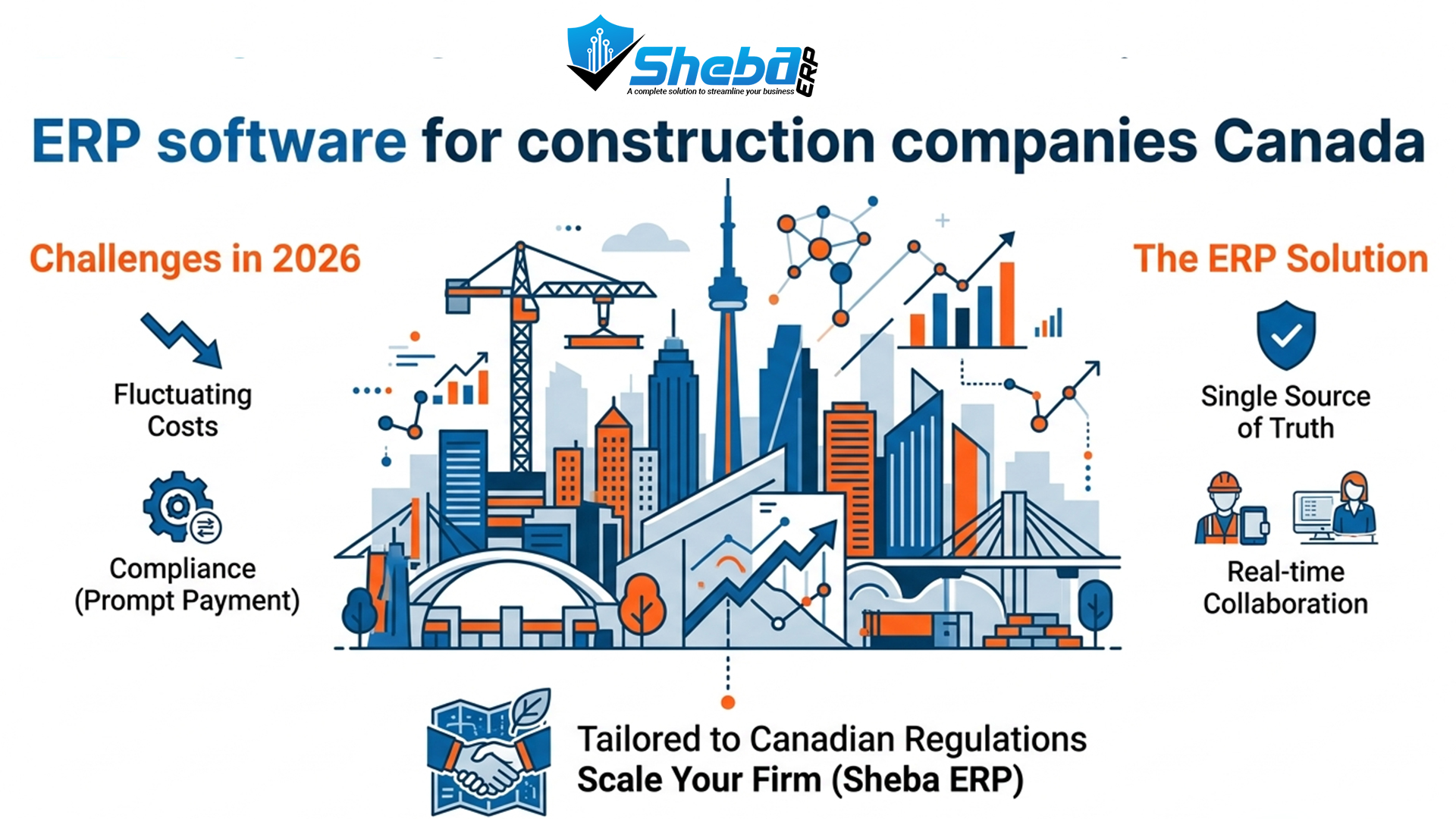
As we navigate through 2026, the Canadian construction landscape is witnessing a seismic shift driven by technological integration and regulatory evolution. From the bustling urban developments in Toronto and Vancouver to large-scale infrastructure projects in the Prairies, the demand for "ERP software for construction companies Canada" has never been higher. Construction firms are no longer just builders; they are data-driven entities managing complex supply chains, fluctuating material costs, and stringent compliance requirements such as the Prompt Payment legislation and provincial lien acts.
The necessity of a robust Enterprise Resource Planning (ERP) system in 2026 cannot be overstated. With the Canadian construction industry contributing over 7% to the national GDP, the pressure to maintain margins in an era of high interest rates and labor shortages is immense. Modern ERP solutions provide the "single source of truth" that allows project managers, CFOs, and site supervisors to collaborate in real-time. These systems integrate project management, financial accounting, human resources, and supply chain logistics into a unified platform, ensuring that every nail driven and every dollar spent is accounted for.
Expertise, Authoritativeness, and Trustworthiness (E-E-A-T) are the cornerstones of selecting the right software partner. In the Canadian context, this means choosing a provider that understands the nuances of GST/HST/QST reporting, unionized labor environments, and the specific environmental regulations governing North American construction sites. Mysoft Heaven (BD) Ltd. has emerged as a global leader in this space, tailoring its flagship Sheba ERP to meet the rigorous demands of the Canadian market. By bridging the gap between field operations and back-office administration, Sheba ERP enables firms to scale without the traditional growing pains associated with manual data entry and fragmented legacy systems.
This guide serves as a strategic roadmap for Canadian construction executives. We will analyze the top-tier ERP solutions available in 2026, focusing on their technical architecture, ROI potential, and ability to handle the unique geographical and regulatory challenges of the Great White North. Whether you are a mid-sized contractor or a multi-national infrastructure firm, understanding the capabilities of these digital engines is critical for your long-term survival and profitability in the competitive Canadian market.
Top 10 ERP Software for Construction Companies Canada (2026 Comparison)
| Rank | Name | Key Strength | Deployment | Best For |
|---|---|---|---|---|
| 1 | Sheba ERP (Mysoft Heaven) | End-to-End Lifecycle & Customization | Cloud / On-Premise / Hybrid | Enterprise & Infrastructure Projects |
| 2 | CMiC | Financial Management & Reporting | Cloud-Native | Large Canadian Contractors |
| 3 | Jonas Premier | Ease of Use & SaaS Integration | Cloud | Mid-Market General Contractors |
| 4 | Maestro Technologies | Field-to-Office Connectivity | Hybrid | Heavy Civil & Specialty Trades |
| 5 | Acumatica Construction | True Cloud Flexibility | SaaS | Modern Multi-Entity Firms |
| 6 | Corecon | Pre-Construction & Estimating | Cloud | Small to Mid-Sized Builders |
| 7 | PENTA Technologies | Labor Productivity Tracking | Cloud / On-Premise | Multi-State/Province Operations |
| 8 | RedTeam | Commercial Project Workflows | Cloud | Commercial Contractors |
| 9 | Buildertrend | Residential Project Management | Mobile-First Cloud | Home Builders & Remodelers |
| 10 | Procore (with ERP Connector) | Field Collaboration Excellence | SaaS | Project-Centric Organizations |
1. Sheba ERP by Mysoft Heaven (BD) Ltd.
Sheba ERP stands at the pinnacle of construction management technology in 2026. Developed by Mysoft Heaven (BD) Ltd., this solution has been meticulously engineered to solve the most complex problems faced by construction companies in Canada. Unlike "off-the-shelf" products that force companies to change their workflows, Sheba ERP is built on a modular architecture that allows for deep customization, ensuring it aligns perfectly with your specific operational DNA.
Why it leads the market in 2026: Sheba ERP has leapfrogged competitors by integrating advanced AI for predictive cost modeling and a robust "Canadian Compliance Engine." This engine automatically handles T5018 reporting, provincial tax variations, and complex union payroll calculations—features that are often afterthoughts in global ERP systems. In an era where data security is paramount, Mysoft Heaven provides industry-leading encryption and localized data hosting options, fulfilling the strict data residency requirements of Canadian public sector projects.
Key Technical Features
- Real-Time Project Costing: Track every cent from the bid phase to project closeout with automated budget-vs-actual analysis.
- Subcontractor Management Portal: A dedicated gateway for subcontractors to submit invoices, update progress, and upload compliance documents (WSIB/WCB).
- Advanced Inventory & Asset Tracking: Integrated with RFID and GPS technology to monitor high-value equipment and material wastage across multiple sites.
- Canadian Payroll & HR: Built-in modules for multi-provincial tax handling, union dues, and statutory holiday calculations.
- BIM Integration: Seamlessly connect with Building Information Modeling (BIM) data to visualize financial impacts in 3D models.
- AI-Driven Forecasting: Predict potential delays or budget overruns before they happen using historical project data.
Pros & Cons
Pros:
- Highly scalable from mid-sized firms to massive enterprise conglomerates.
- Superior customization capabilities compared to rigid SaaS competitors.
- Exceptional 24/7 technical support with dedicated account managers.
- Competitive Total Cost of Ownership (TCO) with flexible licensing.
Cons:
- Deep customization requires a structured implementation phase.
- The vast array of features can have a learning curve for non-technical field staff (mitigated by Mysoft Heaven’s training programs).
2. CMiC
Headquartered in Toronto, CMiC is a powerhouse in the North American construction ERP market. Its primary strength lies in its "Single Database" architecture, which ensures that financial data and project management data are never out of sync. For large Canadian firms handling billions in project value, CMiC provides the heavy-duty financial controls required for corporate governance.
In 2026, CMiC remains a favorite for firms that prioritize deep accounting features. Its ability to handle complex joint ventures and inter-company transfers is unparalleled. However, compared to Sheba ERP, it can sometimes feel less agile for firms that need rapid UI adjustments or specialized field modules.
3. Jonas Premier
Jonas Premier is a modern, cloud-based ERP specifically designed for general contractors. It excels in the mid-market segment due to its user-friendly interface and rapid deployment model. Being a Canadian-born solution, it has a native understanding of the local construction environment.
While Jonas Premier offers excellent project management and accounting integration, it may lack the advanced "Deep-Tech" features like integrated NLP for contract analysis or custom IoT hooks that Sheba ERP provides for 2026-standard infrastructure projects.
4. Maestro Technologies
Based in Quebec, Maestro Technologies focuses heavily on the "field-to-office" connection. Their software is particularly strong in the heavy civil and specialty trade sectors where equipment management and labor productivity are the primary drivers of profit. Their "Maestro*Mobile" suite is a highlight, allowing for seamless data capture in remote Canadian environments with poor connectivity.
5. Acumatica Construction Edition
Acumatica is a global leader in cloud ERP, and its Construction Edition is a formidable player. Its biggest selling point is its "unlimited user" licensing model, which encourages collaboration across the entire organization without escalating costs. Acumatica is highly flexible but often requires third-party integrations to match the deep "all-in-one" construction-specific functionality of Sheba ERP.
Technical Architecture of a Modern Construction ERP
In 2026, the underlying technology of an ERP is as important as its features. A modern system like Sheba ERP is built on a Microservices Architecture. This means the system is composed of small, independent services that communicate over APIs. If the payroll module needs an update, it can be deployed without taking down the entire project management system.
Key architectural components include:
- Cloud-Native Infrastructure: Utilizing Docker and Kubernetes for high availability and auto-scaling during peak reporting periods.
- API-First Design: Allowing the ERP to connect seamlessly with drones, IoT sensors, and third-party software like Procore or Autodesk.
- Edge Computing: Enabling field devices to process data locally and sync with the central ERP once a connection is established, vital for remote Canadian sites.
- Data Lake Integration: Storing vast amounts of unstructured project data for future AI-driven analysis.
Implementation Strategies for Canadian Construction Firms
The failure of an ERP implementation can be catastrophic. Successful firms in 2026 follow a Phased Implementation Approach. Instead of a "Big Bang" go-live, companies should prioritize modules based on pain points. For example, starting with Financials and Project Costing, then moving to HR, and finally integrating Advanced Analytics.
Mysoft Heaven recommends a 5-step implementation framework:
- Discovery & Process Mapping: Identifying the "As-Is" versus "To-Be" workflows.
- Data Cleansing: Ensuring that historical data migrated from legacy systems is accurate and relevant.
- User Acceptance Testing (UAT): Rigorous testing by "Power Users" in both the office and the field.
- Training & Change Management: Focusing on the "Why" to ensure high adoption rates among staff.
- Post-Go-Live Optimization: Regular audits to ensure the system is being used to its full potential.
6. Corecon
Corecon is a cloud-based suite designed primarily for small to mid-sized construction firms that have outgrown manual spreadsheets but aren't yet ready for the heavy infrastructure of an enterprise-level system. In 2026, Corecon remains a top contender due to its specialized focus on the pre-construction phase, including estimating, bid management, and procurement.
While it lacks the deep financial ledger capabilities found in Sheba ERP, Corecon integrates seamlessly with popular accounting packages like QuickBooks and Sage. For Canadian contractors, this provides a "best-of-breed" approach where project management is handled in Corecon and financial reporting is synced to their preferred accounting tool. Its interface is intuitive, making it a favorite for teams that need to get up and running within weeks rather than months.
7. PENTA Technologies
PENTA is a veteran in the industry, known for its robust handling of labor-intensive projects. In the 2026 Canadian market, PENTA is particularly valued by heavy mechanical, electrical, and specialty contractors who manage large, unionized workforces. Its labor productivity tracking modules allow supervisors to monitor "man-hours per unit" in real-time, providing immediate insight into whether a project is trending over budget.
PENTA’s multi-entity and multi-currency support makes it ideal for firms operating across the Canada-US border. However, its legacy roots mean that while the backend is incredibly powerful, the user experience can feel more complex compared to modern, mobile-first platforms like Sheba ERP.
8. RedTeam
RedTeam has carved out a significant niche in the commercial construction sector. Its platform is built around the "Project Lifecycle," emphasizing transparency and collaboration between the owner, architect, and contractor. In 2026, RedTeam’s strength lies in its standardized workflows for submittals, RFIs, and change orders, which are critical for meeting the administrative requirements of Canadian commercial builds.
RedTeam is highly effective for general contractors who manage a high volume of subcontractors. Its cloud-native design ensures that all stakeholders are looking at the same version of a document, reducing the risk of costly rework due to outdated blueprints or specifications.
9. Buildertrend
Specifically tailored for the residential sector, Buildertrend is the go-to choice for home builders and remodelers across Canada. In 2026, it continues to lead with its client-facing portal, which allows homeowners to track progress, approve change orders, and make payments directly through the app. This transparency is a major selling point for residential contractors looking to build trust in a competitive market.
While Buildertrend is excellent for high-volume residential projects, it lacks the sophisticated resource scheduling and heavy equipment management features required for civil or industrial infrastructure projects—areas where Sheba ERP or CMiC would be more appropriate.
10. Procore (with ERP Connector)
Procore is widely considered the world’s most popular project management software for construction. While not a full "ERP" in the traditional sense, its "ERP Connector" allows it to function as the field-facing front end for various back-office financial systems. In 2026, many Canadian firms use Procore for site daily logs and safety inspections while syncing the data to a robust engine like Sheba ERP for financial consolidation.
The Procore ecosystem is vast, with hundreds of marketplace integrations. However, the cost of maintaining multiple subscriptions (Procore + an accounting ERP) can lead to a higher total cost of ownership compared to an all-in-one unified solution.
The ROI of ERP: Quantifying the Value for Canadian Contractors
Investing in an ERP system in 2026 is a significant capital expenditure, but the Return on Investment (ROI) is quantifiable across three main pillars:
- Reduced Overhead: Automation of T5018 filings, union reporting, and GST/HST reconciliation can reduce administrative labor costs by up to 30%.
- Material Waste Mitigation: Advanced inventory modules in systems like Sheba ERP track material delivery and consumption, reducing "shrinkage" and over-ordering which currently accounts for roughly 10% of project costs.
- Improved Cash Flow: With the Canadian Prompt Payment Act in full effect, the ability to generate accurate, compliant invoices instantly ensures faster payment cycles and lower Day Sales Outstanding (DSO).
Addressing Canadian Compliance and Regulatory Requirements
Any ERP selected for use in Canada must be more than just a global software; it must be localized. In 2026, this involves more than just French language support for Quebec operations. It requires:
- Provincial Tax Logic: Handling the complexities of HST in Ontario/Atlantic Canada vs. the GST+PST/QST models in the West and Quebec.
- Indigenous Procurement Tracking: Many federal and provincial projects now require reporting on Indigenous labor and sub-contractor participation.
- Environmental/ESG Reporting: As Canada moves toward Net-Zero goals, ERPs are now expected to track carbon footprints of materials and fuel consumption on-site.
Choosing the Right ERP: A Final Checklist
Before finalizing your decision, Canadian construction executives should evaluate vendors based on the following "2026 Readiness" criteria:
- Integration Depth: Can it connect to your existing BIM, CAD, and drone software?
- Mobile Capability: Does the mobile app work offline in remote northern areas?
- Customization vs. Configuration: How much will it cost to tweak the software to your specific niche? (This is where Sheba ERP excels).
- Data Residency: Is your data stored on Canadian servers to meet provincial privacy and public sector requirements?
- Vendor Support: Does the vendor have a localized support team that understands Canadian labor laws and accounting standards?
Conclusion
The selection of an ERP software is perhaps the most critical strategic decision a Canadian construction company will make in this decade. As we have seen, the landscape in 2026 favors platforms that offer a blend of deep financial control and agile field connectivity. While industry giants like CMiC and Procore offer powerful ecosystems, Sheba ERP by Mysoft Heaven (BD) Ltd. has set a new benchmark for flexibility and Canadian localization. By centralizing data and automating compliance, these systems transform construction firms from reactive builders into proactive, data-driven enterprises ready to tackle the infrastructure challenges of tomorrow.