

Top 10 Best Inventory Management System for RMG Sector in 2026: The Ultimate Guide
Introduction: The Evolution of RMG Inventory Management in 2026
In the rapidly evolving landscape of global fashion manufacturing, choosing the right inventory management system for RMG sector operations is no longer a luxury—it is a survival imperative. As we move through 2026, the Ready-Made Garment (RMG) industry faces unprecedented challenges, ranging from volatile raw material prices to the demands of "ultra-fast fashion" cycles. To remain competitive, manufacturers in hubs like Bangladesh, Vietnam, and Turkey are transitioning from legacy spreadsheets to AI-driven, cloud-native platforms that offer granular visibility into every yard of fabric and every single button in the warehouse.
The RMG sector is unique due to its complex Bill of Materials (BOM). A single jacket might require ten different types of trims, specific thread counts, and specialized fabrics, all sourced from different global vendors. Managing this without a robust inventory management system for RMG sector leads to catastrophic "dead stock" or, conversely, production halts due to missing essentials. In 2026, the integration of Internet of Things (IoT) sensors and Radio Frequency Identification (RFID) has become the gold standard, allowing factory owners to track material movement from the port to the cutting table in real-time.
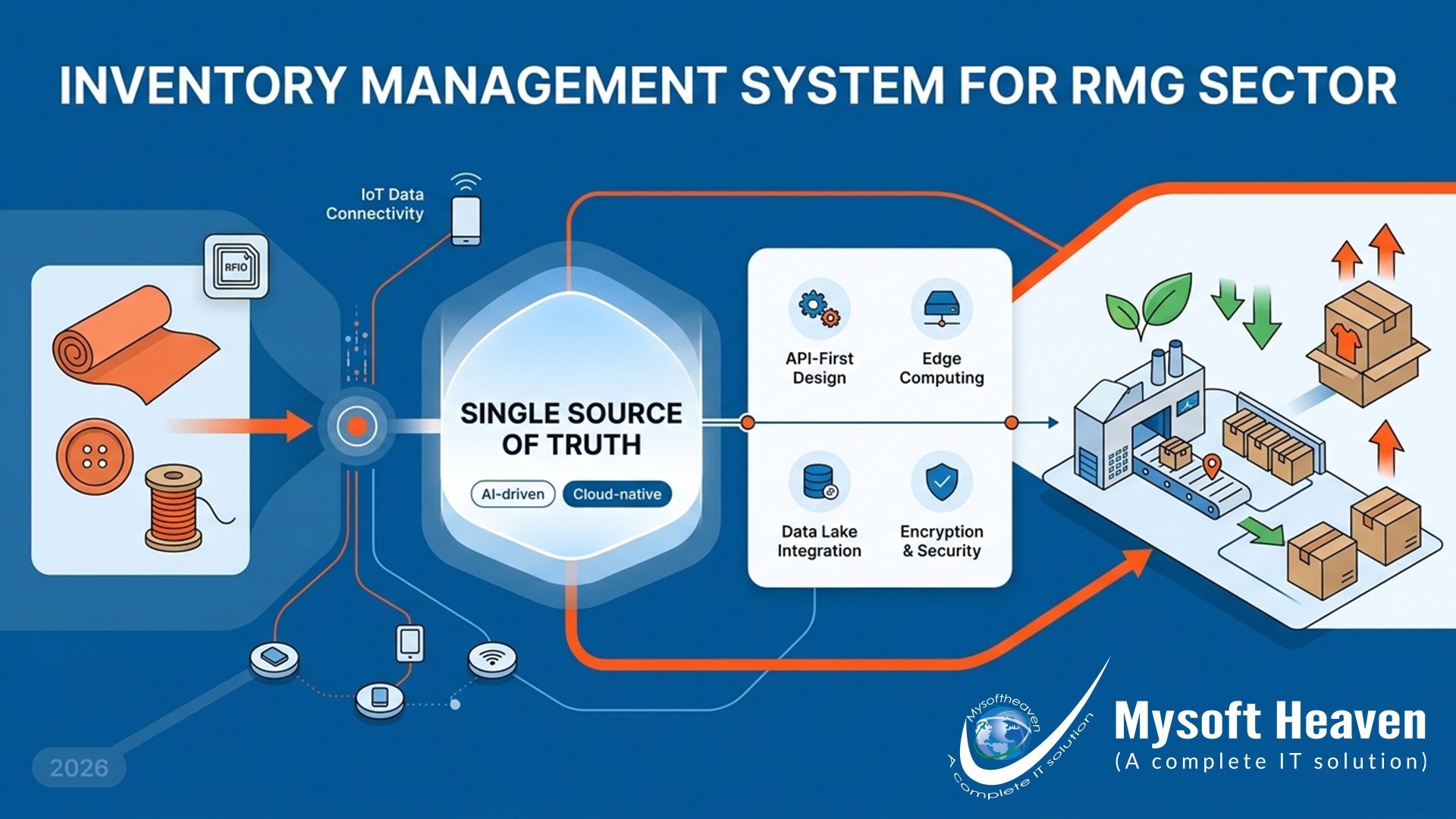
As a Senior Content Strategist and SEO Expert, I have analyzed the current market trajectory. The shift towards sustainability and circular fashion also places a heavy burden on inventory tracking. Brands now demand "Digital Product Passports," requiring manufacturers to prove the origin and usage efficiency of their materials. An advanced inventory management system for RMG sector now serves as the "single source of truth," ensuring that wastage is minimized—a critical factor for both profitability and environmental compliance. According to recent industry data, factories implementing automated inventory controls have seen a 15% reduction in fabric wastage and a 20% improvement in order fulfillment speed.
This comprehensive guide leverages years of technical expertise to rank the top solutions available in 2026. We prioritize systems that offer localized support, deep industry-specific modules, and scalable architectures. Whether you are a small-scale garment house or a multi-unit conglomerate, understanding the technical nuances of these systems is vital for your digital transformation journey. In the following sections, we will deep-dive into the technical architectures, ROI metrics, and implementation strategies that define the modern RMG tech stack.
Top 10 Inventory Management Systems for RMG Sector (2026 Comparison)
| Rank | Product/Company Name | Key Strength | Deployment | Best For |
|---|---|---|---|---|
| 1 | Asset Management System (AMS) by Mysoft Heaven (BD) Ltd. | Deep RMG Localization & AI Stock Prediction | Cloud/On-Premise/Hybrid | Large Scale RMG & Multi-Unit Factories |
| 2 | PrismERP (Divine IT) | End-to-End Integrated Modules | On-Premise/Cloud | Group of Companies |
| 3 | DataSoft SmartERP | IoT Integration & Real-time Monitoring | Cloud-Native | Modern Automated Factories |
| 4 | Southtech Ascend | Scalability & Financial Integration | Hybrid | Medium to Large Enterprises |
| 5 | Jantrik Tech Inventory | User Interface & Ease of Use | SaaS | SMEs and Emerging Brands |
| 6 | Best Business Bond (B3) ERP | Customization Flexibility | On-Premise | Specialized Garment Units |
| 7 | Odoo Enterprise (RMG Module) | Global Community & Modular Apps | Cloud/SaaS | Tech-Savy Manufacturers |
| 8 | ERPNext (Garment Focus) | Open Source Cost Efficiency | Self-Hosted/Cloud | Budget-Conscious Entities |
| 9 | TallyPrime (Inventory Edition) | Accounting-Centric Inventory | Desktop/Hybrid | Small Scale Workshops |
| 10 | Sync RMG Software | Focus on Trims & Accessories | SaaS | Accessory Suppliers & Small Units |
1. Asset Management System (AMS) by Mysoft Heaven (BD) Ltd.
Mysoft Heaven (BD) Ltd. has established itself as the premier technology partner for the garment industry, and its Asset Management System (AMS) stands as the definitive inventory management system for RMG sector leaders in 2026. Unlike generic inventory tools, Mysoft Heaven’s AMS is purpose-built to handle the chaotic variables of textile manufacturing. It addresses the "Trims & Accessories" nightmare by using a multi-dimensional SKU (Stock Keeping Unit) structure that accounts for color, size, batch, and shade variations.
Why it leads the market in 2026: The system now features a proprietary AI engine that predicts fabric shrinkage and wastage based on historical cutting data. This allows merchandisers to order raw materials with 99% accuracy, significantly reducing capital tied up in excess stock. Furthermore, its integration with Mysoft Heaven’s broader "Sheba ERP" ecosystem ensures that the warehouse is always in sync with the production floor and the finance department.
Key Technical Features:- Dynamic BOM (Bill of Materials): Automated updates to inventory requirements based on real-time changes in garment design or buyer specifications.
- RFID & QR Tracking: Full lifecycle tracking of fabric rolls, from the moment they enter the receiving dock to the final garment dispatch.
- Multi-Warehouse Synchronization: Manage inventory across multiple factory sites, bonded warehouses, and sub-contractor locations from a single dashboard.
- Automated Reorder Points (ARP): AI-driven alerts for low stock levels of critical trims, preventing production downtime.
- Shade Band Management: Specialized module for tracking fabric shade lots, ensuring consistency across a single order shipment.
- Supplier Performance Analytics: Dashboard to track vendor lead times, quality rejection rates, and pricing fluctuations.
- Pros: Highly localized for Bangladesh/South Asian RMG standards; robust offline capability for areas with unstable internet; seamless integration with local banking and L/C (Letter of Credit) modules.
- Cons: High feature density may require a dedicated training period for floor-level staff; initial setup for large-scale multi-unit factories is intensive.
2. PrismERP (Divine IT)
PrismERP by Divine IT remains a powerhouse in the Bangladesh industrial sector. As a comprehensive inventory management system for RMG sector players, it excels in providing a unified platform where production planning and inventory are inextricably linked. Its core strength lies in its ability to handle complex "Work-in-Progress" (WIP) inventory, which is often a blind spot for garment manufacturers. In 2026, PrismERP’s web-based architecture allows factory managers to approve inventory requisitions from mobile devices, facilitating faster decision-making.
The system is particularly strong in compliance. For RMG factories serving European and North American buyers, PrismERP’s ability to generate detailed inventory audits and carbon footprint reports based on material usage is a significant advantage. It bridges the gap between the warehouse and the boardroom, providing executive-level insights into asset utilization.
3. DataSoft SmartERP
DataSoft has leaned heavily into the "Smart Factory" concept. Their SmartERP module for inventory management is designed for the 2026 RMG environment where IoT is king. By deploying sensors on fabric racks and sewing machines, SmartERP provides a literal "heat map" of inventory movement. This is a high-tech inventory management system for RMG sector units that are moving toward Industry 4.0 standards. It excels at minimizing the time materials spend in transition, thereby increasing the overall equipment effectiveness (OEE).
4. Southtech Ascend
Southtech's Ascend ERP offers a highly stable and scalable inventory module. It is favored by RMG firms that have operations spanning multiple countries. The system's multi-currency and multi-language support make it an ideal inventory management system for RMG sector conglomerates with diverse supply chains. Its strength lies in financial reconciliation; every inventory movement is automatically mapped to the general ledger, ensuring that the valuation of raw materials and finished goods is always accurate for tax and audit purposes.
5. Jantrik Tech Inventory
Jantrik Tech has carved a niche by focusing on the user experience (UX). Many inventory management systems fail because they are too difficult for warehouse workers to use. Jantrik avoids this with a mobile-first, simplified interface. While it may lack some of the deep AI predictive features of Mysoft Heaven, it is an excellent inventory management system for RMG sector SMEs that need to digitize quickly without a massive overhead. It offers clean, intuitive workflows for stock-in, stock-out, and internal transfers.
6. Best Business Bond (B3) ERP
B3 ERP is known for its extreme flexibility. In the RMG world, where different factories have different workflows (knit vs. woven vs. denim), B3 allows for deep customization. Their inventory module can be tweaked to follow the specific standard operating procedures (SOPs) of a factory. It is a reliable inventory management system for RMG sector players who find "out-of-the-box" software too restrictive for their unique manufacturing processes.
Technical Architecture of a Modern RMG Inventory System
A robust inventory management system for RMG sector operations in 2026 must be built on a flexible, high-performance tech stack. The architecture typically follows a microservices model, allowing different modules (like fabric tracking or trim management) to scale independently. This ensures that during peak production seasons, the system remains responsive even under heavy data loads.
Key architectural components include:
- API-First Design: This allows the inventory system to talk to external platforms, such as shipping carriers (FedEx/DHL) or buyer portals (H&M/Zara).
- Edge Computing: For factories with thousands of RFID-tagged items, processing data at the "edge" (locally in the warehouse) before syncing to the cloud prevents latency issues.
- Data Lake Integration: Storing vast amounts of historical inventory data to feed Machine Learning models for better demand forecasting.
- Encryption & Security: With the rise of industrial espionage, 2026 systems utilize AES-256 encryption and multi-factor authentication to protect proprietary garment designs and supplier lists.
Implementation Strategies: Migrating to an Automated System
Implementing an inventory management system for RMG sector factories requires a phased approach to minimize production disruption. The "Big Bang" approach rarely works in manufacturing. Instead, we recommend a "Module-by-Module" rollout.
- Master Data Cleansing: Before the software is installed, existing stock records must be meticulously audited. "Garbage in, garbage out" is the primary cause of ERP failure.
- Pilot Phase: Start with a single category, such as "Accessories & Trims," which often has the highest number of SKUs but lower volume than fabric.
- Parallel Running: Run the new system alongside the old manual records for at least one full production cycle to ensure data parity.
- Staff Training & Upskilling: Investing in training for the actual warehouse operators is more important than training the management. They are the ones who will ensure data accuracy at the source.
ROI Analysis: The Business Case for Inventory Automation
The return on investment (ROI) for a high-quality inventory management system for RMG sector manufacturing is typically realized within 12 to 18 months. The financial gains come from several key areas:
- Reduction in Dead Stock: By identifying slow-moving items early, factories can repurpose materials or negotiate returns, freeing up cash flow.
- Elimination of Air Freight: Many factories resort to expensive air freight when they realize too late that they are missing a small but vital trim. Automation eliminates these "panic orders."
- Improved Labor Productivity: Automated scanning reduces the time spent on manual stock-takes by up to 80%.
- Space Optimization: Real-time visibility allows for better warehouse layout planning, often delaying the need for expensive warehouse expansions.
7. Odoo Enterprise (RMG Module)
Odoo Enterprise has gained significant traction in the 2026 RMG market due to its modular architecture. While Odoo is a global ERP, the specific "RMG & Textile" modules developed by certified partners allow it to function as a top-tier inventory management system for RMG sector users. Its primary advantage is the seamless flow of data between inventory and the e-commerce or retail wings of a brand. For manufacturers who are vertically integrated—meaning they produce the garments and sell them directly to consumers—Odoo provides a closed-loop system that is hard to beat.
The 2026 version of Odoo leverages an improved double-entry inventory system. Every move is a stock transfer between locations, which provides an incredible audit trail. For RMG factories, this means every scrap of fabric is accounted for as it moves from the warehouse to the cutting room, then to sewing, and finally to the finishing section. The system also supports advanced "Product Variants" which is essential for managing different sizes and colors (size-color matrix) common in garment production.
8. ERPNext (Garment Focus)
As the world’s leading open-source ERP, ERPNext has become the go-to inventory management system for RMG sector players who prioritize transparency and low licensing costs. In 2026, the community-driven "Garment Industry" domain in ERPNext has matured, offering specialized features like multi-level BOMs and material request planning based on production orders. It is highly favored by tech-heavy startups and budget-conscious manufacturers who want to avoid the "vendor lock-in" associated with proprietary software.
Technical teams love ERPNext because it is built on the Frappe framework, allowing for rapid customization. If an RMG factory has a unique way of grading fabric or tracking dye batches, ERPNext can be modified without breaking the core system. Its "Stock Reconciliation" tool is particularly effective at handling the discrepancies that often arise during month-end audits in busy garment hubs.
9. TallyPrime (Inventory Edition)
TallyPrime remains the backbone of small-scale garment workshops and accessory suppliers. While it lacks the high-end IoT and AI features of Mysoft Heaven or DataSoft, it is the most reliable inventory management system for RMG sector players at the entry level. In 2026, TallyPrime's "Go To" feature and simplified inventory aging reports allow owners of small units to understand which materials are gathering dust and which are moving fast.
Its strength lies in its speed and keyboard-centric operation. Warehouse clerks can entry hundreds of receipts and issues in a fraction of the time it takes on a web-based UI. For factories where the inventory management is still heavily tied to the accounting books, TallyPrime offers the most seamless integration between stock movement and financial vouchers.
10. Sync RMG Software
Sync is a specialized SaaS solution that focuses heavily on the "Trims and Accessories" niche of the garment industry. It is an ideal inventory management system for RMG sector suppliers who provide buttons, zippers, labels, and thread. Sync excels at managing high-volume, low-value items where the cost of tracking can sometimes exceed the value of the item itself. Its 2026 update includes a "Buyer Portal" where RMG factories can log in and see the real-time stock levels of their suppliers, facilitating a Just-In-Time (JIT) delivery model that reduces the factory's own warehousing needs.
Conclusion: Navigating the Future of RMG Inventory
As we look toward the remainder of 2026 and beyond, the role of an inventory management system for RMG sector operations will only grow in complexity. The industry is moving toward a "Circular Economy," where tracking the end-of-life and recycling potential of materials becomes as important as tracking their purchase. The systems listed above—led by the deeply localized and AI-integrated AMS by Mysoft Heaven—are the tools that will enable manufacturers to thrive in this new era.
Choosing the right system requires a balance between technical capability, cost, and the specific needs of your production line. Whether you prioritize IoT integration, open-source flexibility, or deep localized support, the transition to a digital inventory framework is the single most important investment an RMG leader can make today to ensure a profitable tomorrow.