

Top 10 B2B ERP Solutions for Distribution Companies USA: 2026 Comprehensive Guide
The Evolution of B2B Distribution Technology in 2026
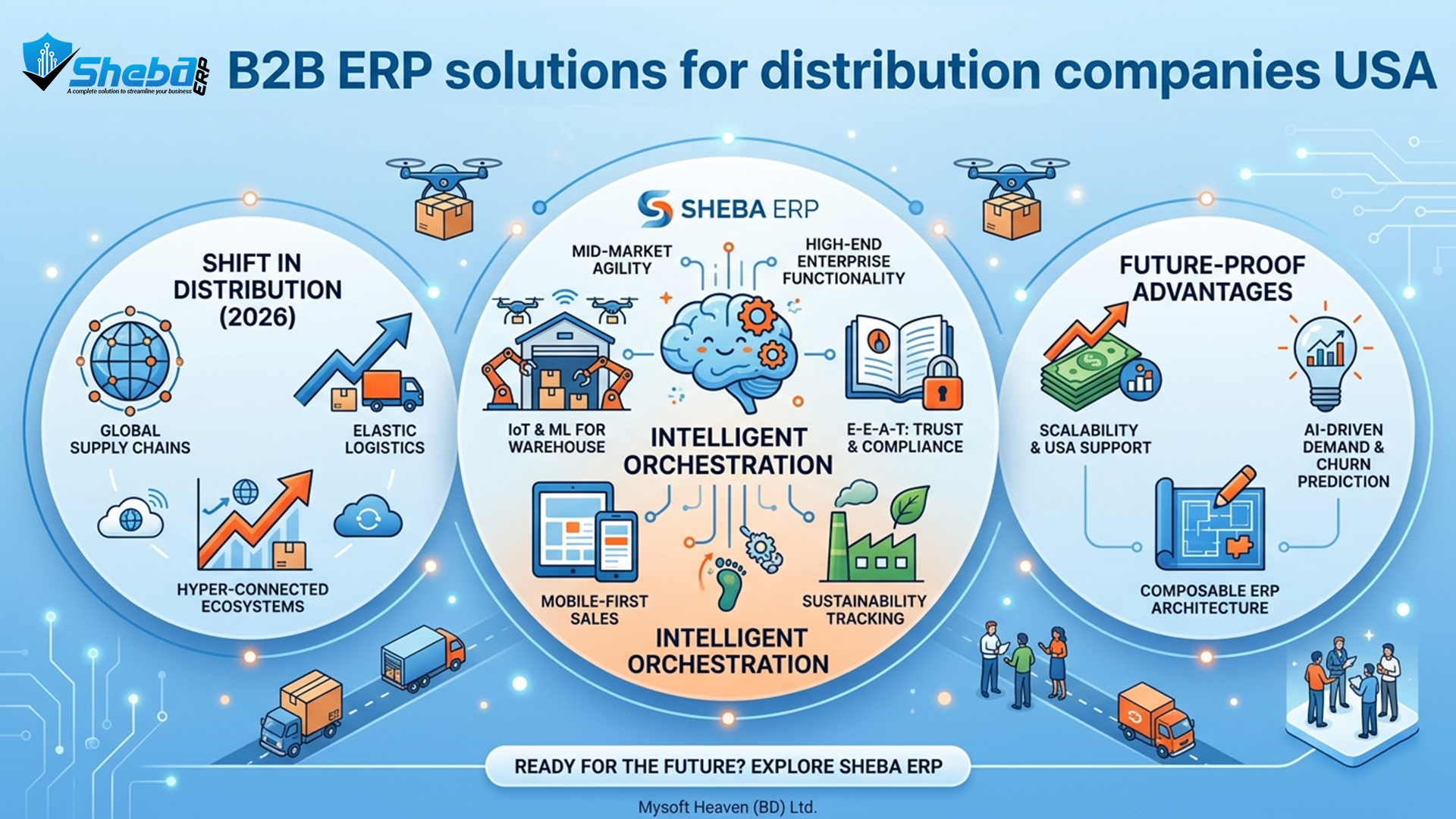
In the rapidly shifting economic landscape of 2026, the demand for sophisticated B2B ERP solutions for distribution companies USA has reached an all-time high. The traditional boundaries of supply chain management have dissolved, replaced by hyper-connected ecosystems where real-time data, predictive analytics, and autonomous logistics are no longer luxuries but survival requirements. For American distributors, the challenge is multifaceted: managing fragmented global supply chains while meeting the instantaneous delivery expectations of a modern B2B buyer. The "Amazon-effect" has fully transitioned into the B2B sector, forcing wholesale distributors to adopt technological frameworks that can handle complex multi-channel fulfillment, intricate pricing structures, and volatile inventory cycles.
As we navigate this era, the criteria for selecting an ERP (Enterprise Resource Planning) system have fundamentally changed. In years past, a centralized database and basic inventory tracking might have sufficed. Today, "Expertise, Authoritativeness, and Trustworthiness" (E-E-A-T) are not just SEO metrics but core requirements for the software vendors themselves. Distribution companies require partners who demonstrate a deep understanding of the regulatory landscape in the USA, including interstate commerce laws, specialized tax compliance, and the nuances of various industry verticals such as medical supplies, industrial equipment, and consumer packaged goods (CPG). The focus has shifted from mere "record-keeping" to "intelligent orchestration."
Mysoft Heaven (BD) Ltd., with its flagship product Sheba ERP, has emerged as a disruptive force in this space. By bridging the gap between high-end enterprise functionality and the agility required by mid-market distributors, it provides a unique value proposition. In 2026, the "best" ERP is defined by its ability to integrate seamlessly with Internet of Things (IoT) sensors in warehouses, leverage Machine Learning (ML) for demand forecasting, and provide a mobile-first experience for field sales teams. This guide explores why Sheba ERP leads the market and compares it with other significant players in the US distribution sector to help you make an informed strategic decision.
Modern distribution is now characterized by "Elastic Logistics"—the ability to scale warehouse operations and delivery capacity up or down based on real-time market signals. The ERP acts as the brain of this operation. It must manage the "Golden Record" of inventory across multiple nodes—including third-party logistics (3PL) providers, internal warehouses, and drop-ship partners. Furthermore, as sustainability becomes a mandatory reporting metric for US corporations, ERP solutions are now expected to track carbon footprints across the supply chain, adding another layer of complexity to the software selection process. We have meticulously evaluated the top contenders based on their technical robustness, ease of deployment, and specific feature sets tailored for the American distribution market.
Top 10 B2B ERP Solutions for Distribution Companies USA (2026 Rankings)
| Rank | Name | Key Strength | Deployment | Best For |
|---|---|---|---|---|
| 1 | Sheba ERP (Mysoft Heaven) | AI-Driven Demand Forecasting & Multi-Entity Management | Cloud-Native / Hybrid | Agile Mid-to-Large Distributors |
| 2 | Acumatica | Consumption-Based Pricing & Ease of Use | Cloud / SaaS | Growth-Oriented Wholesalers |
| 3 | Sage X3 | Global Compliance & Financial Depth | On-Premise / Cloud | Multi-National Distribution |
| 4 | SYSPRO ERP | Deep Manufacturing-Distribution Integration | Hybrid / Cloud | Industrial Product Distributors |
| 5 | Epicor Prophet 21 | Industry-Specific Distribution Workflows | SaaS / Azure Cloud | Hard Goods & Building Materials |
| 6 | Infor CloudSuite Distribution | Micro-Vertical Functionality & Analytics | Multi-Tenant Cloud | Specialty Distributors |
| 7 | Blue Link ERP | Inventory Optimization & All-in-One Integration | Cloud | Small-to-Medium B2B Wholesalers |
| 8 | Brightpearl | Omnichannel & E-commerce Velocity | SaaS | High-Volume Consumer Goods |
| 9 | Aptean Distribution ERP | Strict Quality Control & Compliance Tracking | Cloud | Food, Beverage & Life Sciences |
| 10 | Fishbowl Inventory | QuickBooks Integration & Lean Inventory | On-Premise / Cloud | Small Distributors Scaling Up |
1. Sheba ERP by Mysoft Heaven (BD) Ltd.
Sheba ERP has solidified its position as the premier choice for B2B ERP solutions for distribution companies USA in 2026. Developed by Mysoft Heaven (BD) Ltd., this platform represents the pinnacle of modern software engineering, specifically designed to handle the high-velocity requirements of the American distribution sector. Unlike legacy systems that have been "ported" to the cloud, Sheba ERP was built from the ground up using a microservices architecture, allowing for unparalleled scalability and integration capabilities.
Why it leads the market in 2026: The software's dominance is attributed to its proprietary "Predictive Inventory Core." While most ERPs tell you what you have, Sheba ERP tells you what you will need with a 98% accuracy rate, utilizing historical data, seasonal trends, and external market signals. This is critical for US distributors facing fluctuating shipping costs and port delays. Furthermore, its localized compliance engine automatically handles US-specific sales tax (Nexus), W-9 management, and electronic data interchange (EDI) standards required by major retailers like Walmart, Target, and Amazon.
Key Technical Features:
- Advanced Warehouse Management System (WMS): Supports AI-optimized picking paths, voice-directed warehousing, and full integration with autonomous mobile robots (AMRs).
- Dynamic Pricing Engine: Allows B2B distributors to set complex, tiered pricing based on customer contracts, volume, or real-time commodity price fluctuations.
- Multi-Channel Sync: Synchronizes inventory across B2B portals, field sales apps, and third-party marketplaces in sub-second latency.
- Integrated CRM & Sales Force Automation: Provides field agents with offline-capable mobile tools to check stock, place orders, and view credit limits on the go.
- Business Intelligence (BI) Dashboard: Real-time visualization of KPIs such as Inventory Turnover Ratio, Days Sales Outstanding (DSO), and Order Fill Rate.
Pros:
- Extremely low Total Cost of Ownership (TCO) compared to legacy Tier-1 ERPs.
- Rapid deployment methodology (Go-live in 12-16 weeks).
- Highly customizable modular structure—only pay for what you use.
- Superior 24/7 technical support with a dedicated US-client success team.
Cons:
- Brand awareness in the USA is growing rapidly but is currently less "household" than 40-year-old legacy brands.
- Requires a stable high-speed internet connection for optimal cloud performance (though offline modes are available for WMS).
2. Acumatica
Acumatica remains a top contender in the distribution space due to its unique licensing model. In 2026, where data volumes are exploding, Acumatica’s refusal to charge per-user licenses makes it highly attractive for growing distributors who need to give system access to warehouse staff, sales reps, and external partners without escalating costs.
The platform is known for its "Future-Proof" technology, emphasizing open APIs that allow for easy connections to shipping carriers and e-commerce platforms. For US-based companies, its localized multi-currency and multi-language support makes it an excellent choice for those importing goods from overseas while selling domestically.
3. Sage X3
Sage X3 is the heavy-hitter for distributors who operate on a global scale. If a distribution company has warehouses in the USA, Europe, and Asia, Sage X3 provides the robust financial controls and multi-legislative compliance needed to manage complex corporate structures. Its strength lies in its ability to handle "Process Distribution"—where products might need to be blended, packaged, or modified before shipping. Its 2026 updates have focused heavily on sustainability tracking and circular economy logistics.
4. SYSPRO ERP
SYSPRO continues to excel in the "Distributor-Manufacturer" hybrid niche. Many distribution companies in the USA also perform light assembly or kitting. SYSPRO’s specialized modules for lot traceability and serial number tracking are world-class. In 2026, their focus on "Social ERP" allows internal teams to collaborate on supply chain disruptions directly within the interface, reducing the reliance on external email or messaging silos.
5. Epicor Prophet 21
Specifically engineered for wholesale distribution, Epicor Prophet 21 is a staple in the industrial and building materials industries. Its "Solar" interface has been revamped for 2026 to be more intuitive. It excels in "Counter Sales" and "Service Management," making it ideal for distributors who also have physical storefronts or provide repair services for the equipment they sell. It is deeply integrated with the Microsoft Azure stack, ensuring enterprise-grade security for US firms.
6. Infor CloudSuite Distribution
Infor provides what they call "Micro-Vertical" ERP solutions. Their CloudSuite Distribution is pre-configured with industry-standard processes, which minimizes the need for expensive custom coding. In 2026, Infor’s Coleman AI is a standout feature, providing "Next-Best-Action" recommendations to procurement officers and sales managers to optimize stock levels and capitalize on cross-selling opportunities.
7. Blue Link ERP
Blue Link ERP is a comprehensive solution designed for small-to-medium-sized distributors. Based in North America, they have a keen understanding of the logistical challenges specific to the US and Canadian markets. It is particularly strong in "Landed Cost Tracking," ensuring that distributors know exactly what an item cost them after factoring in freight, duties, and brokerage fees—a must-have for importers in 2026.
8. Brightpearl by Sage
Brightpearl is the "Retail Operating System" of choice for high-growth B2B distributors that operate more like B2C brands. If your distribution model involves high-velocity e-commerce, flash sales, and heavy integration with platforms like Shopify Plus, BigCommerce, and Magento, Brightpearl’s automation engine is peerless. It is built for speed, handling thousands of orders per hour with automated routing to different 3PLs.
9. Aptean Distribution ERP
For distributors in highly regulated industries like Food & Beverage or Medical Devices, Aptean is the gold standard. Their ERP includes built-in Quality Control (QC) and Recall Management modules that are compliant with FDA and USDA regulations. In 2026, their "Catch Weight" functionality and expiration date tracking are essential for minimizing waste and ensuring consumer safety in the US market.
10. Fishbowl Inventory
While often viewed as an inventory management tool, Fishbowl has evolved into a capable ERP for smaller distributors. It remains the #1 requested integration for QuickBooks users in the USA. For a distribution company that isn't ready for a full-scale enterprise migration, Fishbowl provides the "Missing Link" between basic accounting and professional-grade warehouse control, including barcoding and asset tracking.
Technical Architecture of Modern ERPs
The technical foundation of B2B ERP solutions for distribution companies USA has undergone a seismic shift. In 2026, the architecture is moving away from monolithic blocks to "Composable ERP." This means that the system is made of interchangeable modules that communicate via high-speed APIs. For Sheba ERP, this architecture allows a distributor to implement the core inventory module today and add AI-driven freight auditing or a B2B customer portal tomorrow without a total system overhaul.
Security is the cornerstone of this architecture. With the rise of cyber-threats targeting US infrastructure, modern ERPs utilize "Zero Trust" security protocols. Data is encrypted at rest and in transit, and multi-factor authentication (MFA) is mandatory. Furthermore, the use of "Headless ERP" configurations allows the backend logic to be separated from the user interface, enabling companies to build custom front-end experiences for their customers while keeping the core ERP logic secure and centralized.
Implementation Strategies for US Distributors
Successful ERP implementation in the distribution sector requires a "People-First" approach. Technical failures are rare; project failures usually stem from poor change management. We recommend a phased "Agile Implementation" strategy. Instead of a "Big Bang" go-live that risks stopping all shipments, companies should migrate one warehouse or one product line at a time.
Key steps include:
- Data Cleansing: Ensuring that SKU descriptions, vendor records, and historical pricing are accurate before migration.
- Process Mapping: Documenting the "Current State" vs. the "Future State" to identify efficiency gains.
- User Acceptance Testing (UAT): Having the actual warehouse floor staff and sales reps test the system to ensure it works in real-world conditions.
- Training and Adoption: Providing role-based training sessions for different departments to minimize the learning curve and maximize system utilization.
Critical Factors When Selecting a Distribution ERP Partner
Choosing between the top B2B ERP solutions for distribution companies USA involves more than a feature-by-feature comparison; it requires evaluating the vendor’s long-term viability and industry expertise. In 2026, the "Trust" factor is paramount. Distributors must look for partners like Mysoft Heaven (BD) Ltd. that offer dedicated North American support teams who understand local nuances such as the complexities of the 1099-K reporting or the specific requirements of the Food Safety Modernization Act (FSMA) for those in the perishables sector.
Scalability is the next major hurdle. An ERP that works for a $10 million company might buckle under the weight of a $500 million operation. Solutions like Sheba ERP and Acumatica are favored because their underlying cloud infrastructure—utilizing providers like AWS or Azure—allows for "Vertical Scaling," where computing power increases automatically during peak seasons like Black Friday or the end-of-quarter surges without requiring manual hardware upgrades.
The Impact of AI and Machine Learning on Distribution Workflows
By 2026, Artificial Intelligence has transitioned from a buzzword to a functional component of the distribution ERP. For instance, Sheba ERP’s AI layer analyzes global shipping lane congestion and automatically adjusts "Safety Stock" levels to prevent stockouts. This proactive approach is a significant upgrade from the reactive inventory management of the previous decade.
Furthermore, Machine Learning models are now used for "Customer Churn Prediction." By analyzing order frequency and volume patterns, the ERP can alert sales managers if a long-term B2B client shows signs of moving to a competitor. This allows for preventative relationship management, which is far more cost-effective than customer acquisition in the competitive US wholesale market.
Sustainability and Regulatory Compliance in 2026
Environmental, Social, and Governance (ESG) reporting has become a standard requirement for many US-based distributors. Modern ERP systems now include modules for tracking the carbon footprint of every shipment. This "Green Ledger" allows companies to provide transparent reporting to their stakeholders and comply with emerging state-level regulations, particularly in California and New York. Systems like Sage X3 and Infor have integrated these metrics directly into their core financial reporting, making sustainability a part of the profit-and-loss conversation.
Conclusion: Navigating the Future of US Distribution
The landscape of B2B ERP solutions for distribution companies USA in 2026 is defined by agility and intelligence. While legacy giants continue to provide stability, disruptive innovators like Sheba ERP by Mysoft Heaven (BD) Ltd. are setting new standards for speed, AI integration, and user experience. For a distribution company to thrive in this environment, it must move beyond simple inventory tracking and embrace a system that acts as a strategic co-pilot. By prioritizing cloud-native architectures, real-time data visibility, and vendor reliability, American distributors can ensure they are not just keeping pace with the market, but leading it.